Welcome to the Elizabeth Brook Watershed Restoration Project
A Stream of Change
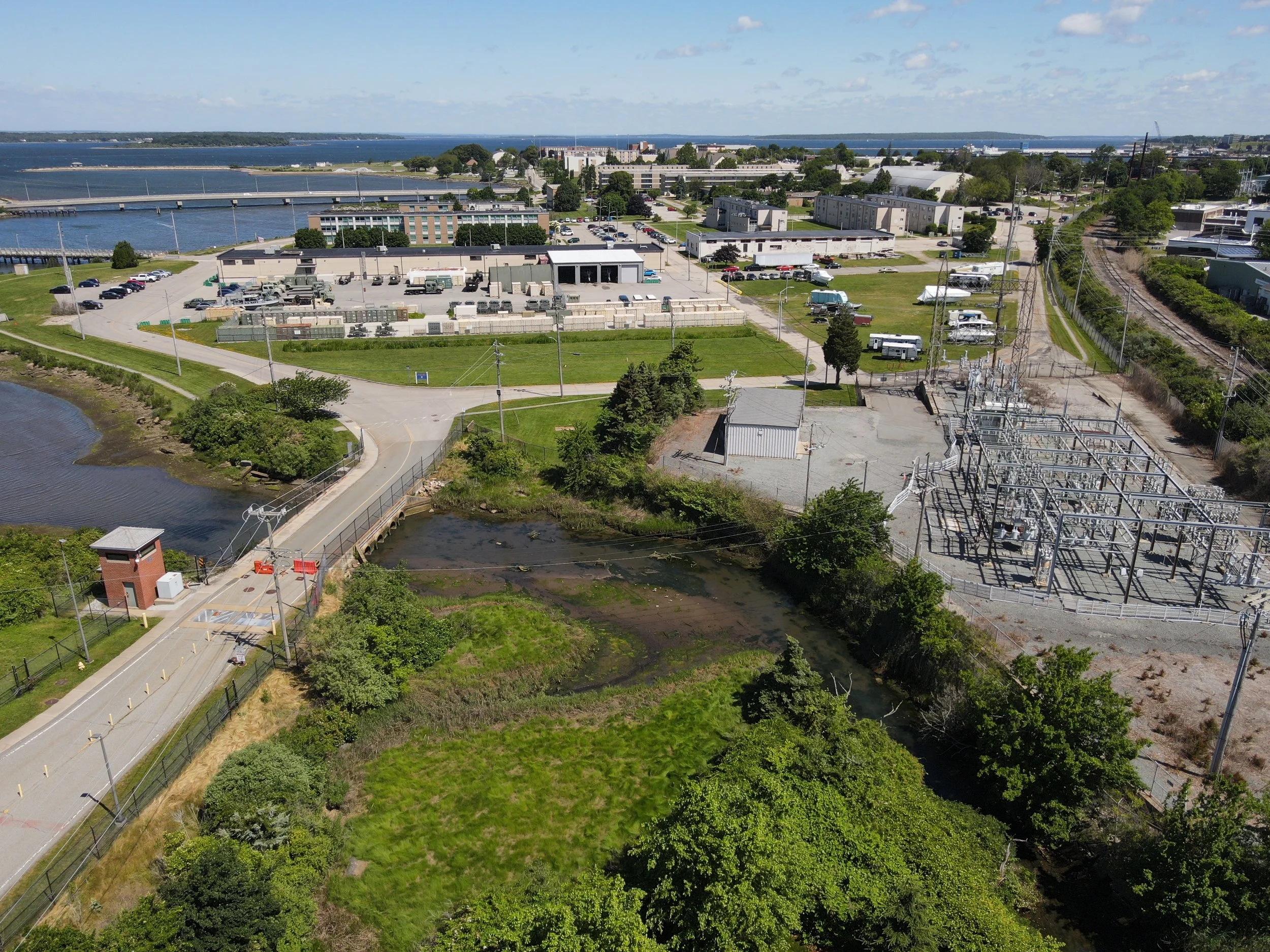
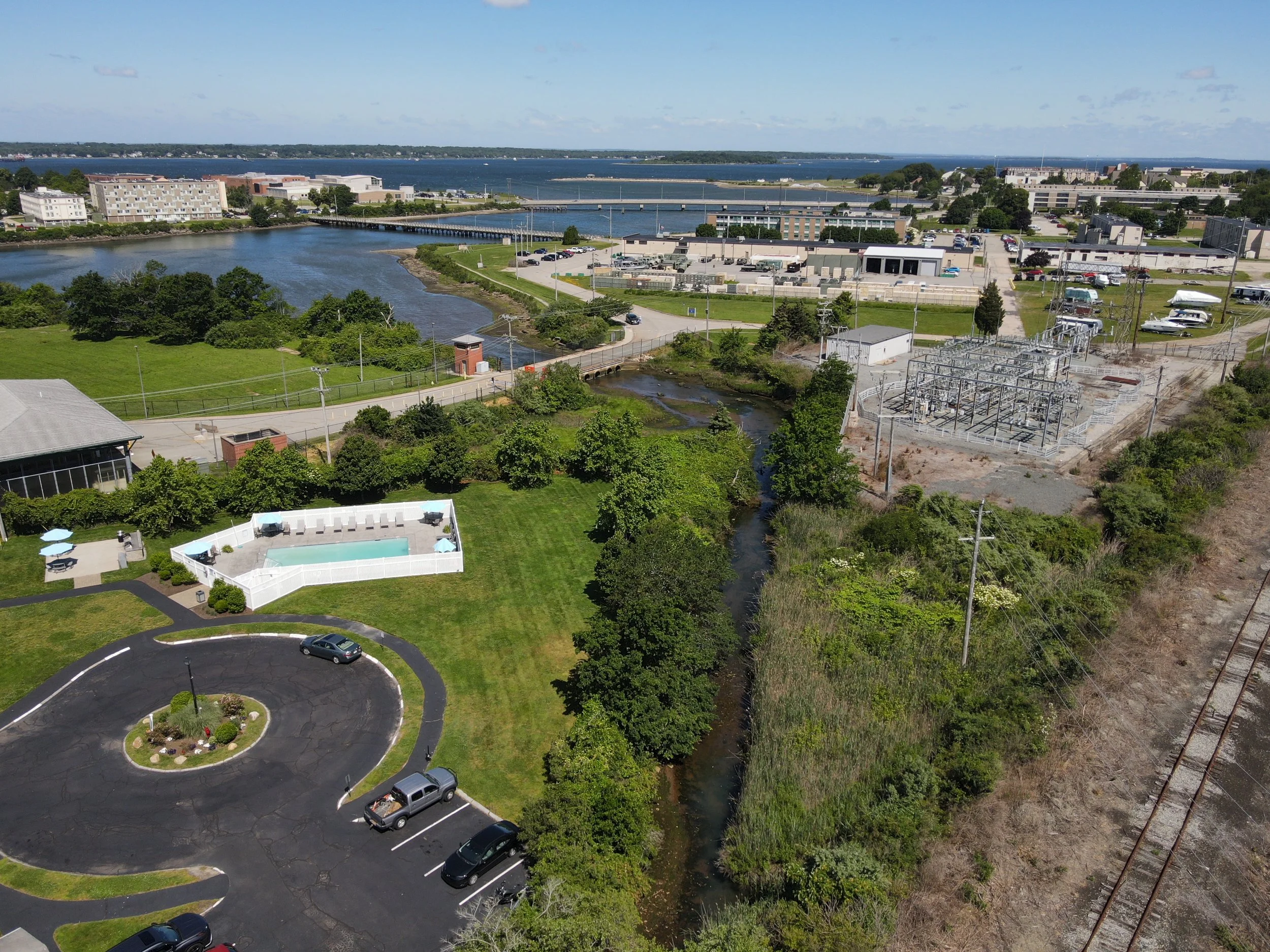
The Elizabeth Brook Restoration Project is working to restore stream, wetland, and tidal marsh habitats in Newport’s North End. Supported in part by funding from the National Fish and Wildlife Foundation (NFWF), the project is currently focused on environmental assessments and preliminary restoration design. Through nature-based solutions, the project aims to improve water quality, reduce flooding, enhance habitat, and create new green space for the community.
By restoring the Brook and surrounding ecosystems, the project seeks to transform an area affected by degraded environmental conditions into a resilient natural asset that supports environmental health, community well-being, and long-term climate adaptation.
Working Together
The project is led by the Eastern Rhode Island Conservation District (ERICD) in partnership with the City of Newport, Naval Station Newport, EA Engineering, Science, and Technology, Inc., PBC (EA), Rhode Island Department of Transportation (RIDOT), private landowners, and community stakeholders. Each partner brings a unique perspective and area of expertise to the restoration effort.
With support from NFWF funding, project partners are collaborating to assess existing environmental conditions and explore restoration opportunities that support the long-term health and resilience of Newport’s North End.
Educational partnerships with the Community College of Rhode Island (CCRI) and FABNewport are also helping connect local students with environmental science and watershed restoration efforts.



Project Area
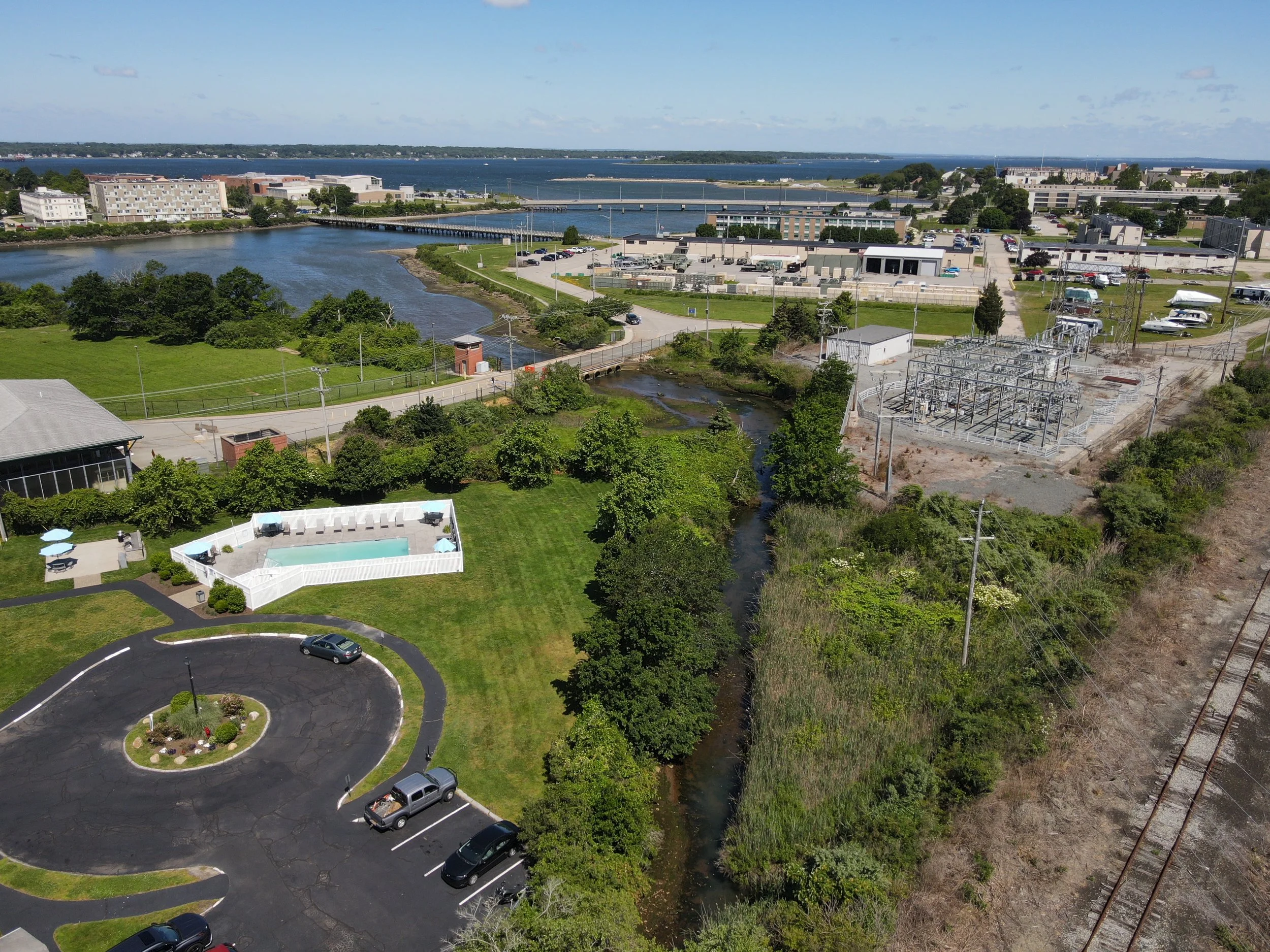
Elizabeth Brook’s North End location was identified as an area in need of restoration, creating an opportunity to improve ecological conditions and address flooding concerns near the mouth of the Brook. The restoration effort aligns with goals outlined in the City of Newport’s North End Urban Plan and is supported in part through funding from the National Fish and Wildlife Foundation.
Over time, Elizabeth Brook has been significantly altered from its natural configuration, with portions of the Brook now flowing through underground metal and concrete culverts. These changes have affected how water moves through the area and contributed to flooding concerns in Newport’s North End.
The project area includes Elizabeth Brook and its surrounding stream, wetland, and tidal marsh habitats. Restoration planning is focused on rehabilitating these interconnected ecosystems to improve water quality, reduce flooding, enhance habitat, and strengthen the area as a natural community resource.
Project Timeline
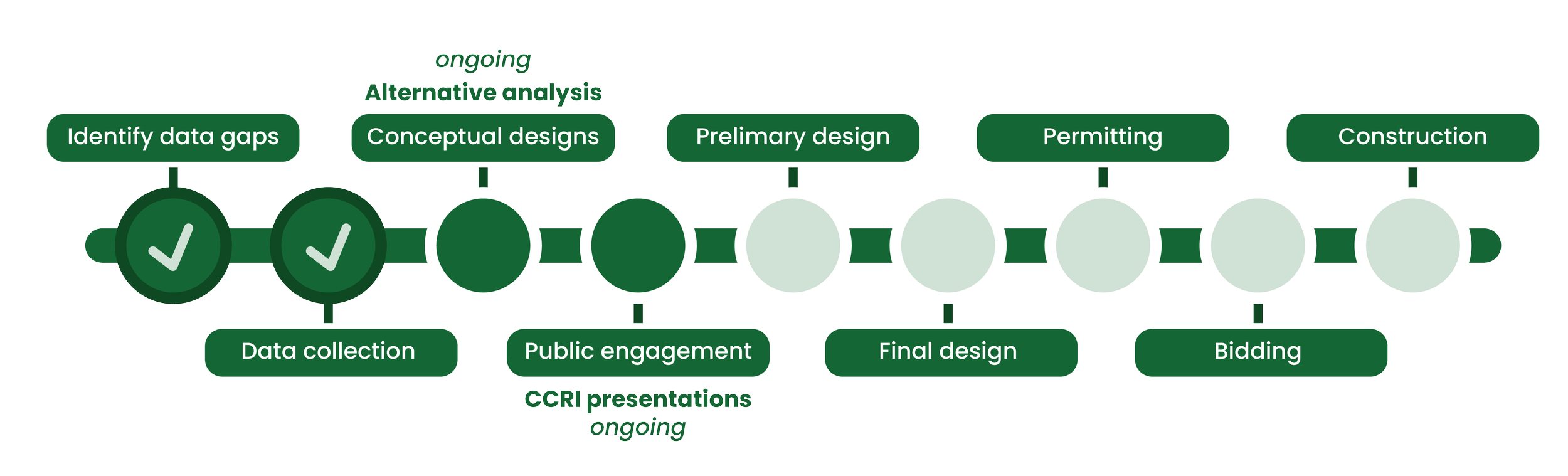
The Elizabeth Brook Watershed Restoration Project is currently focused on site assessment, data collection, and preliminary restoration design. These activities, supported in part by NFWF funding, help project partners better understand existing conditions and evaluate potential restoration strategies.
As planning progresses, the project team will continue refining restoration alternatives and identifying opportunities for future implementation. Additional phases, including final design, permitting, and construction, may be pursued as funding becomes available and necessary approvals are obtained.
The project timeline reflects current planning activities and potential future phases rather than a confirmed construction schedule.
By combining local knowledge, technical expertise, and strong community engagement, the Elizabeth Brook project aims to deliver lasting environmental and social benefits for Newport.
Current assessment and preliminary design activities are laying the groundwork for potential future restoration efforts that could improve environmental conditions and strengthen community resilience.
Observed Site Conditions
Site assessments throughout the Elizabeth Brook project area identified several conditions affecting the health and function of the Brook and surrounding habitat. Key concerns include streambank erosion, invasive plant species, and accumulated trash and debris. Understanding these existing conditions helps establish a baseline for restoration planning and identify areas where improvements may be most beneficial.
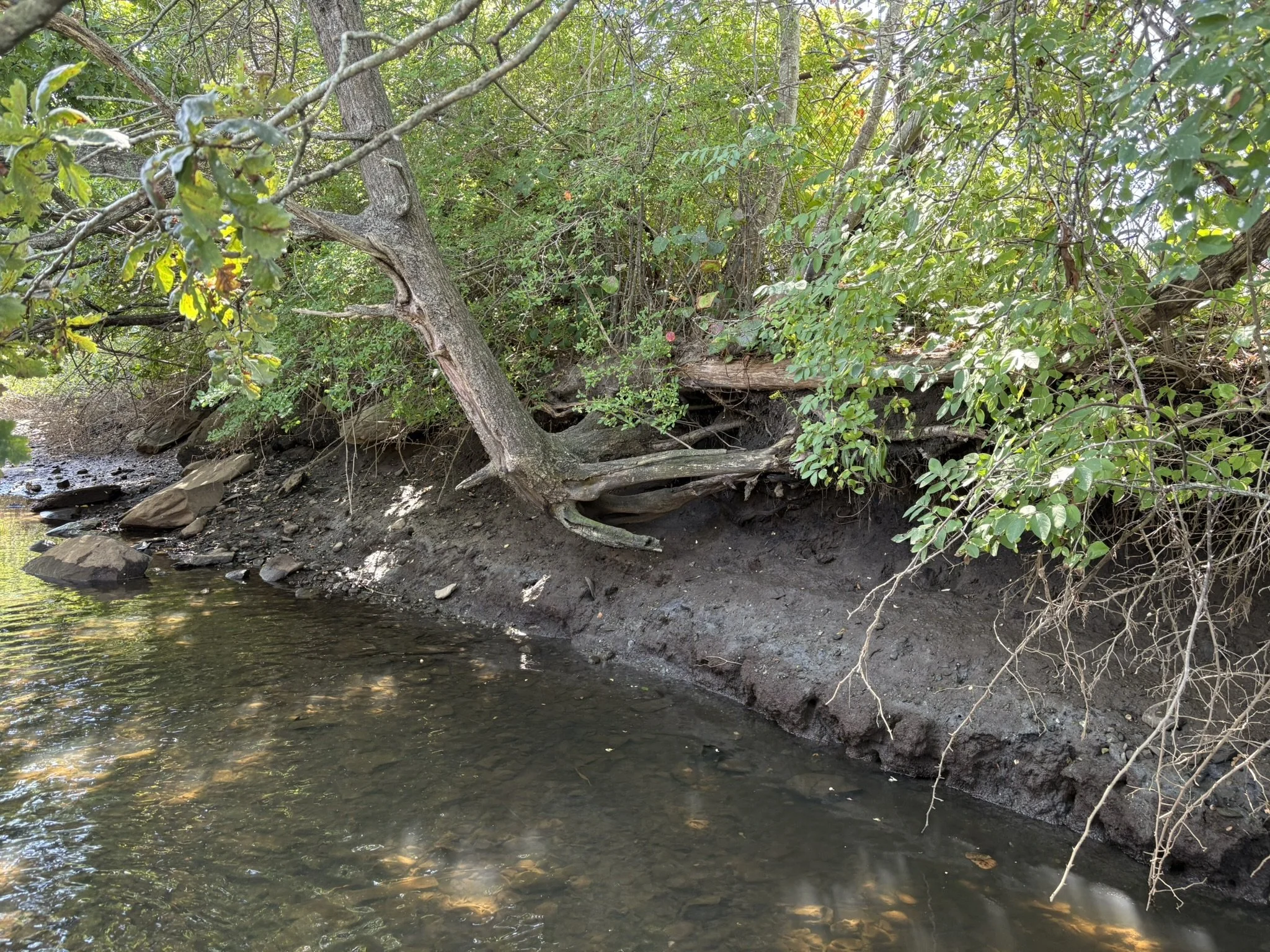
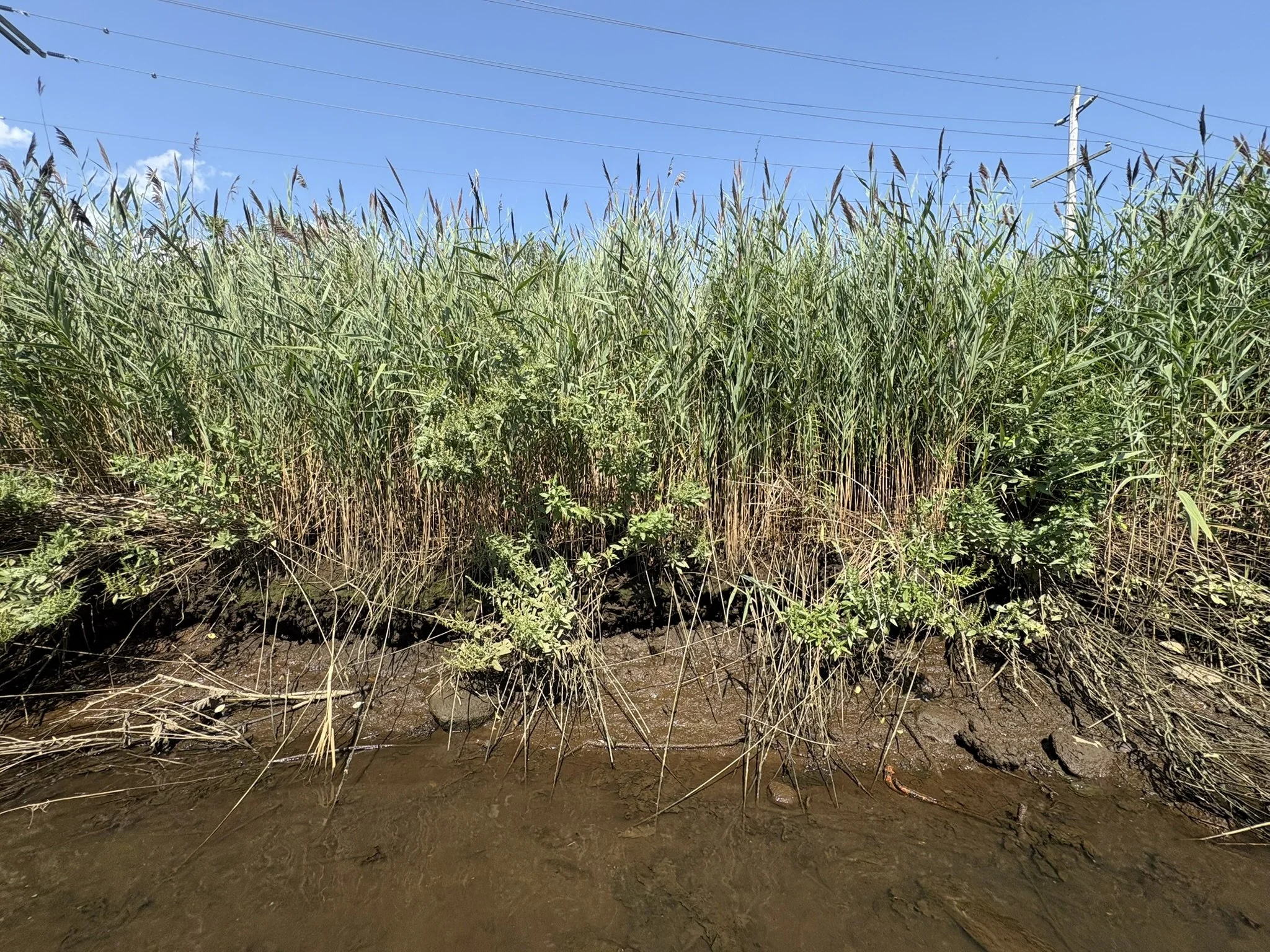
Significant bank erosion has been observed along portions of Elizabeth Brook. Undercutting along both sides of the Brook has reduced streambank stability, increasing the potential for further erosion and sediment entering the waterway.
Bank Erosion
Several invasive plant species have been documented throughout the project area. These species can spread quickly, compete with native vegetation for space and resources, and limit the establishment of native plant communities.
Invasive Species
-
Autumn olive (Elaeagnus umbellate)
Bradford pear (Pyrus calleryana)
Japanese honeysuckle (Lonicera japonica)
Chinese privet (Ligustrum sinense)
Japanese knotweed (Fallopia japonica)
Common reed (Phragmites australis)
Asiatic bittersweet (Celastrus orbiculatus)
Multiflora rose (Rosa multiflora)
English oak (Quercus robur)
False indigo bush (Amorpha fruticosa)
Morrow’s honeysuckle (Lonicera morrowii)
European spindle (Euonymus europaeus)
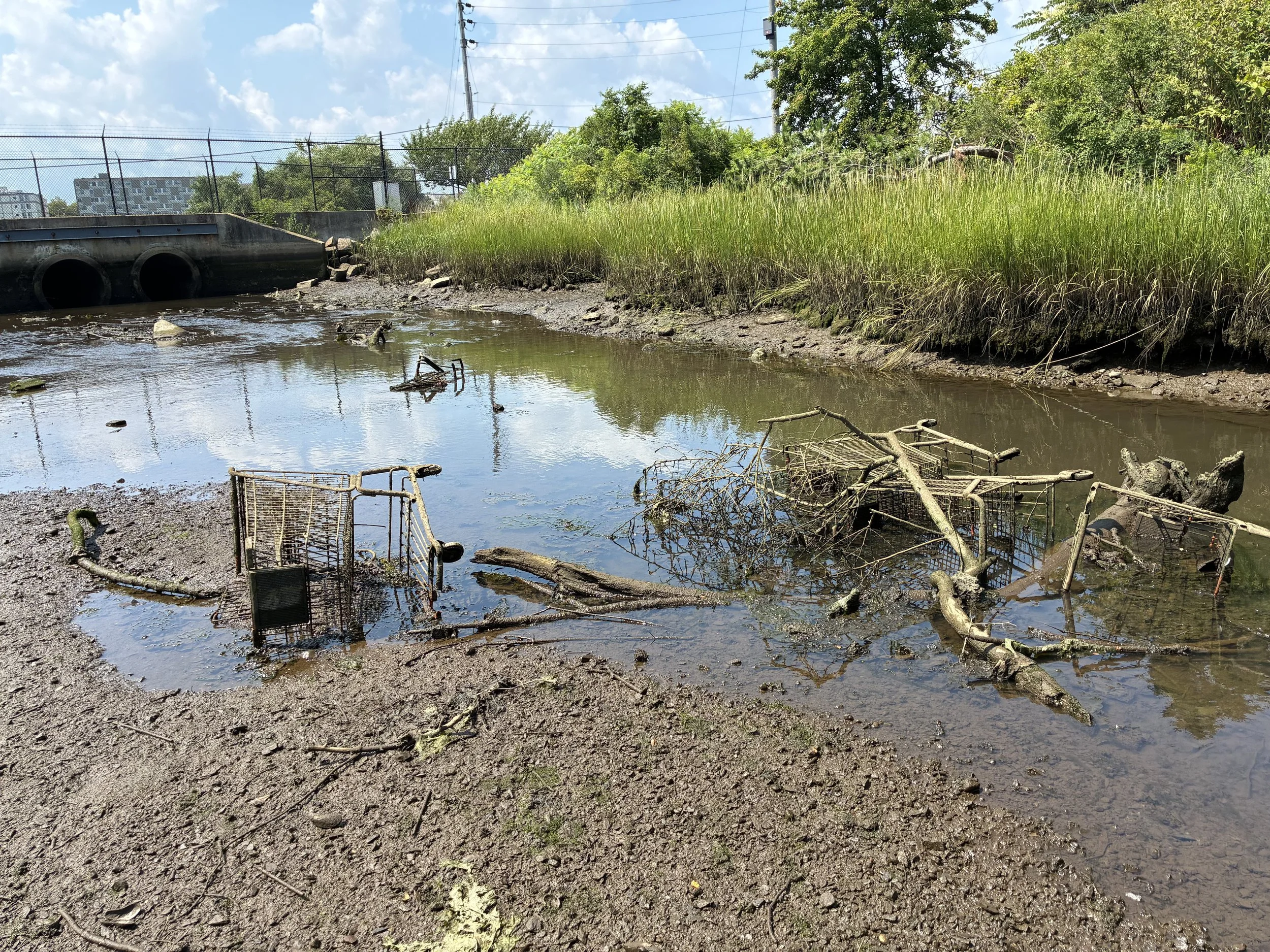
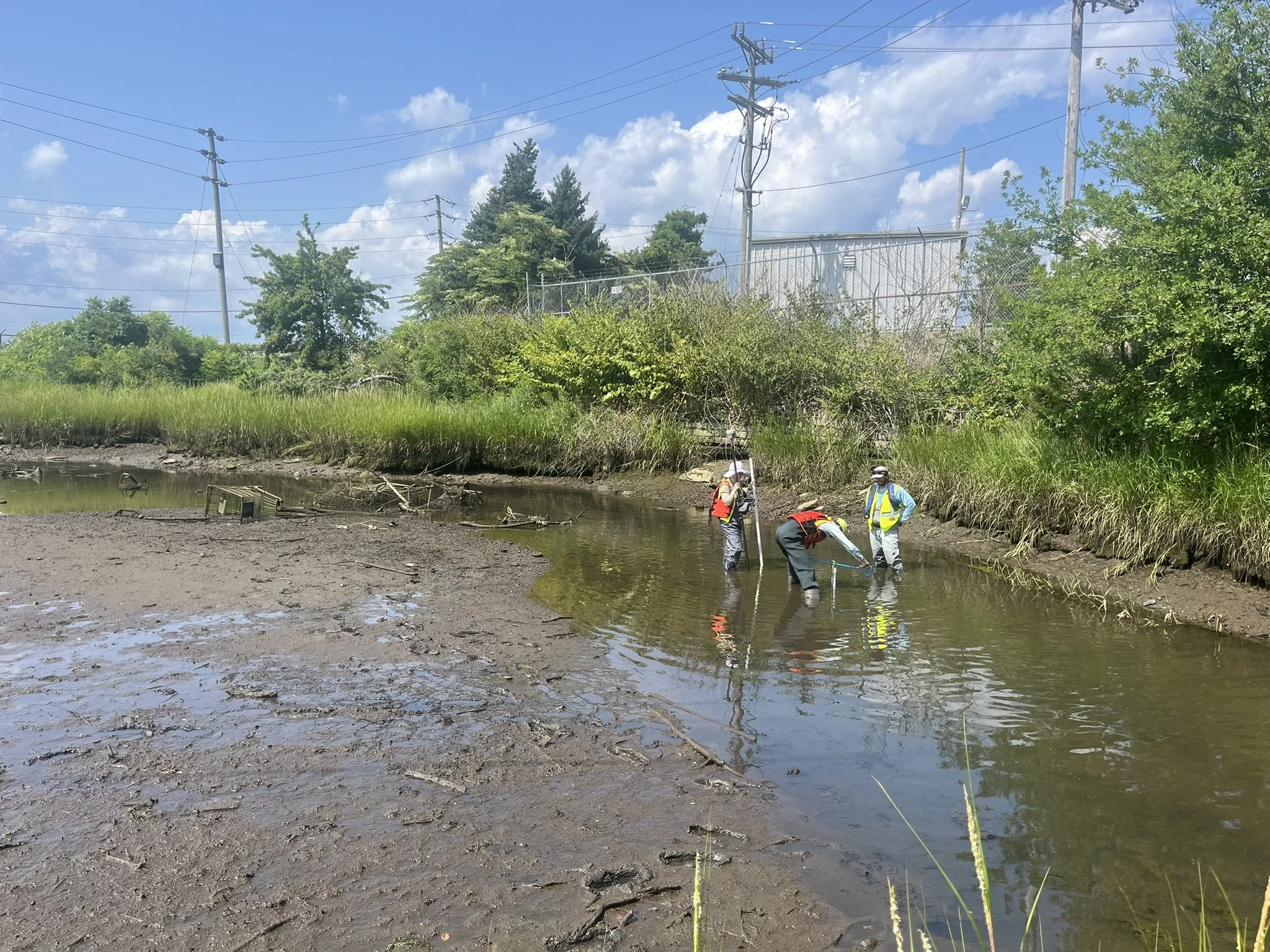
Trash and large debris have accumulated within portions of Elizabeth Brook and the surrounding project area. Observed debris includes shopping carts, old fencing, concrete slabs, and other discarded materials that can interfere with natural water flow and degrade habitat.
Trash and Debris
Data Collection Efforts
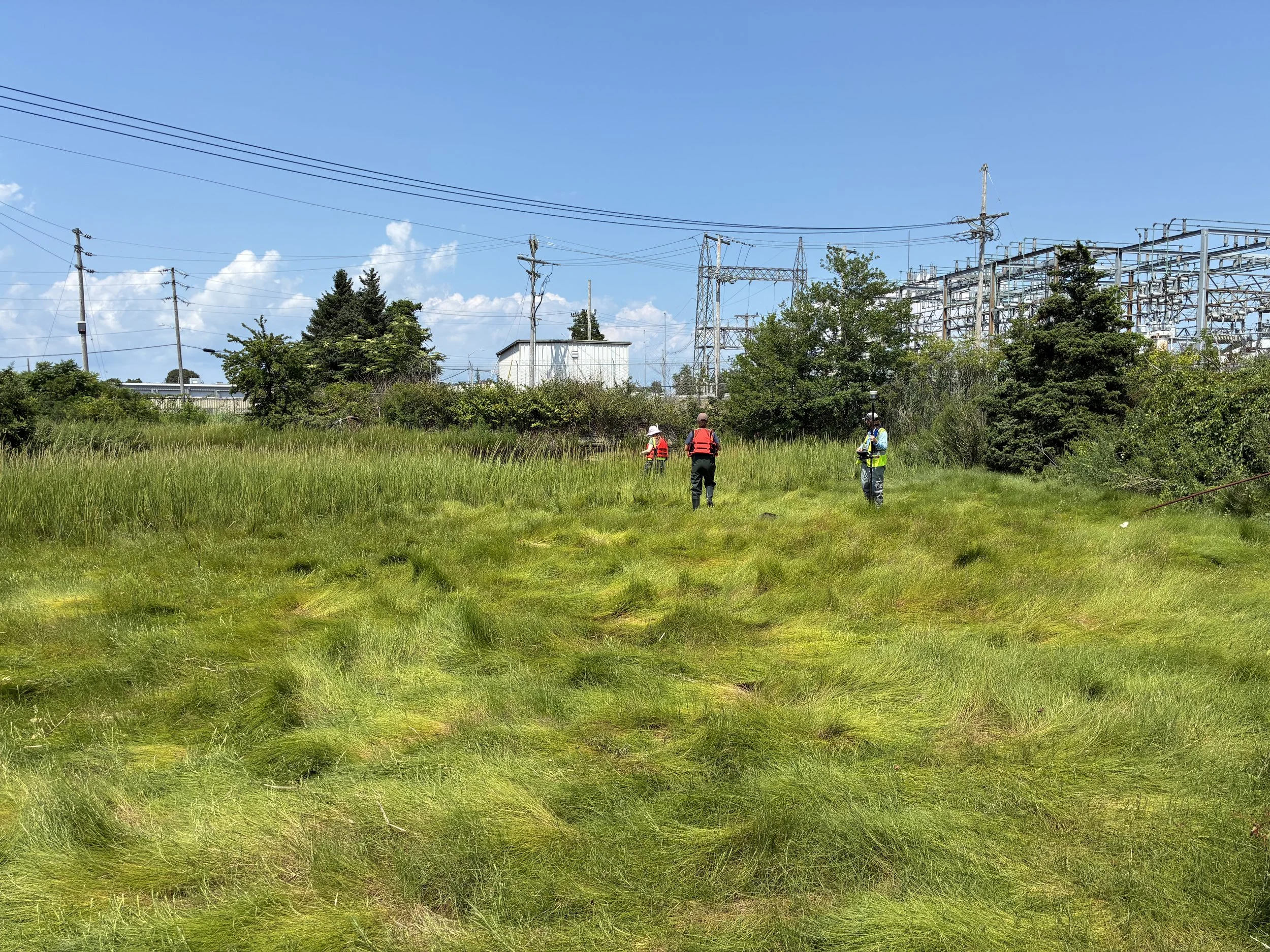
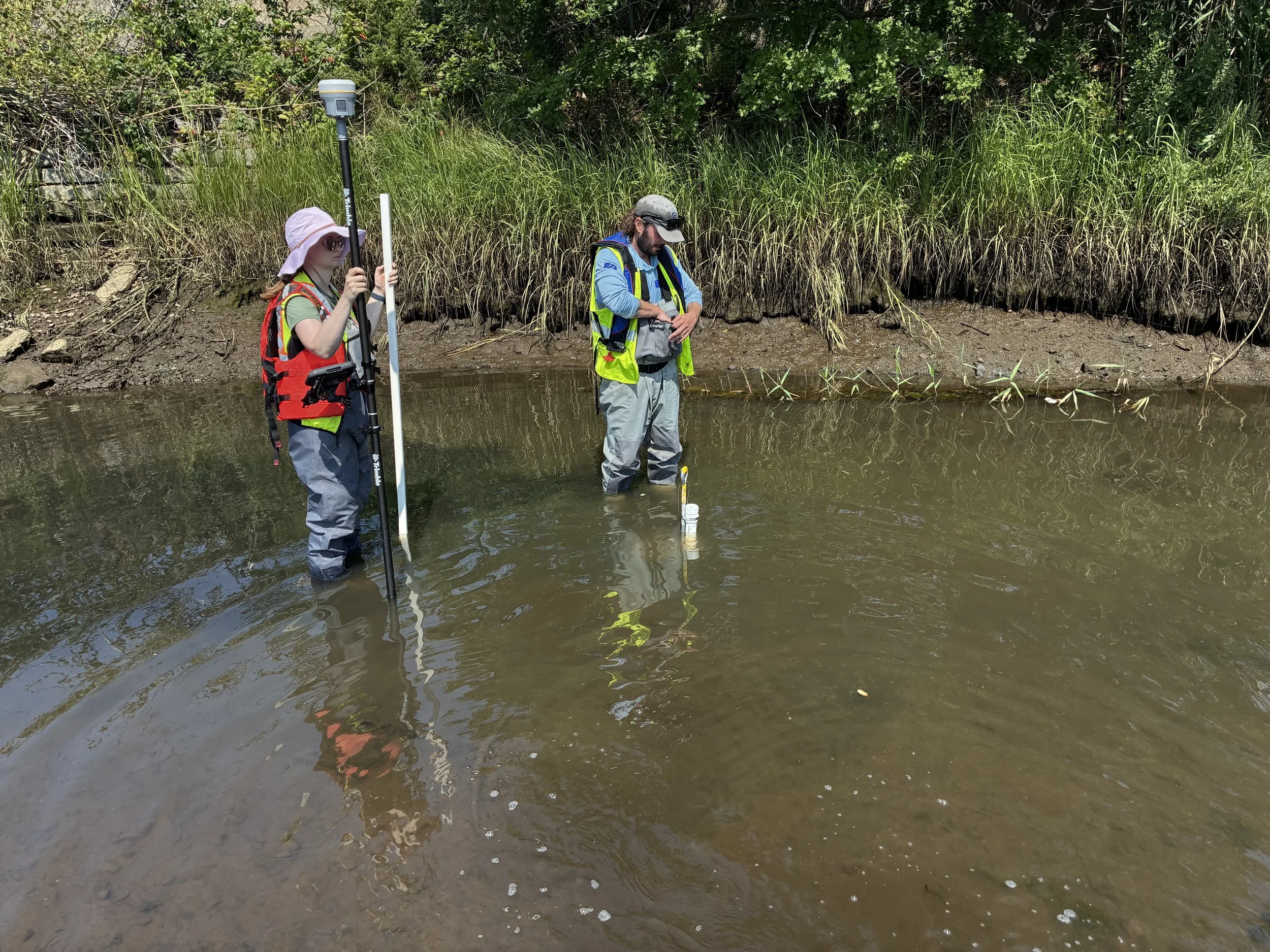
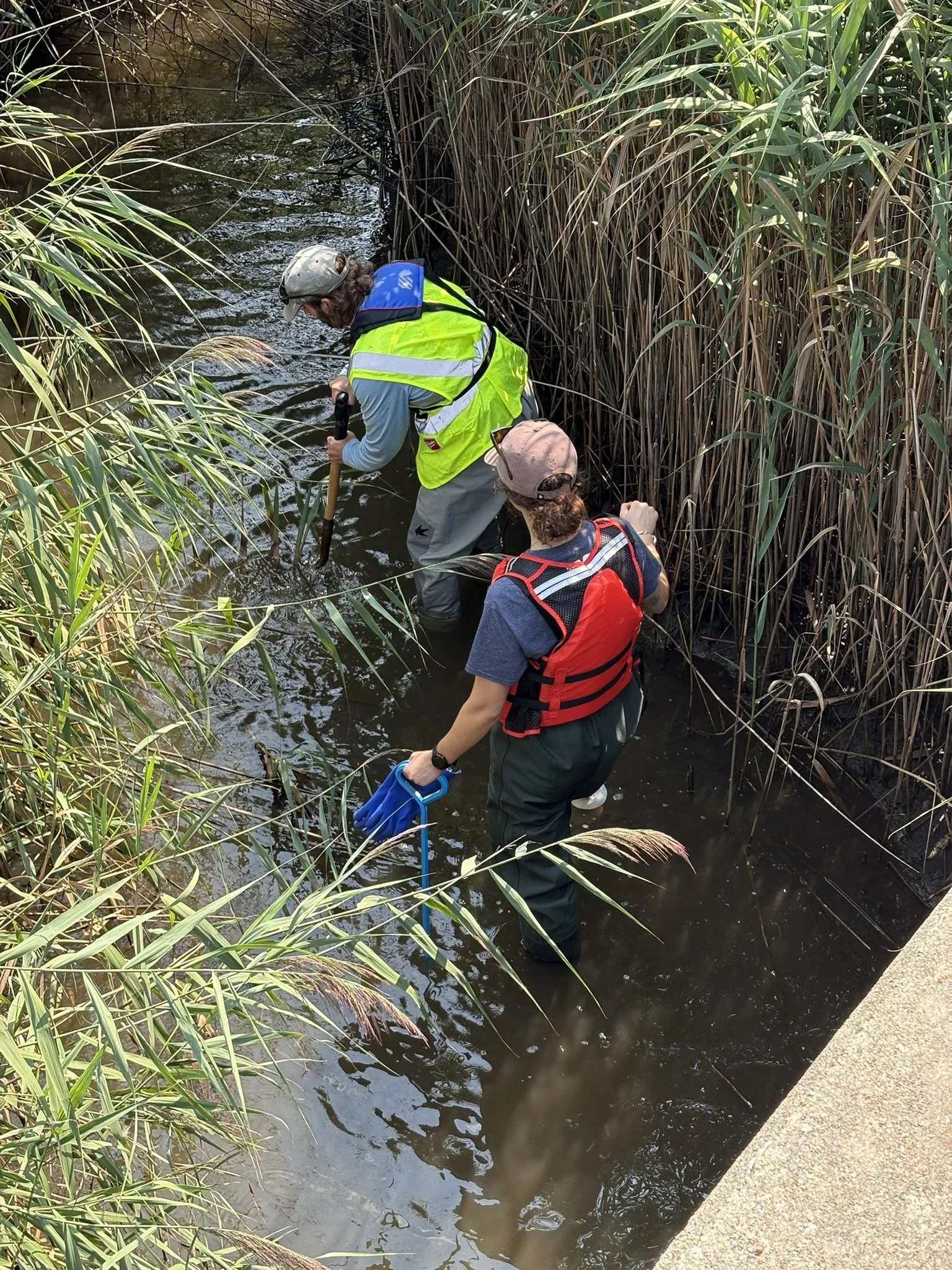
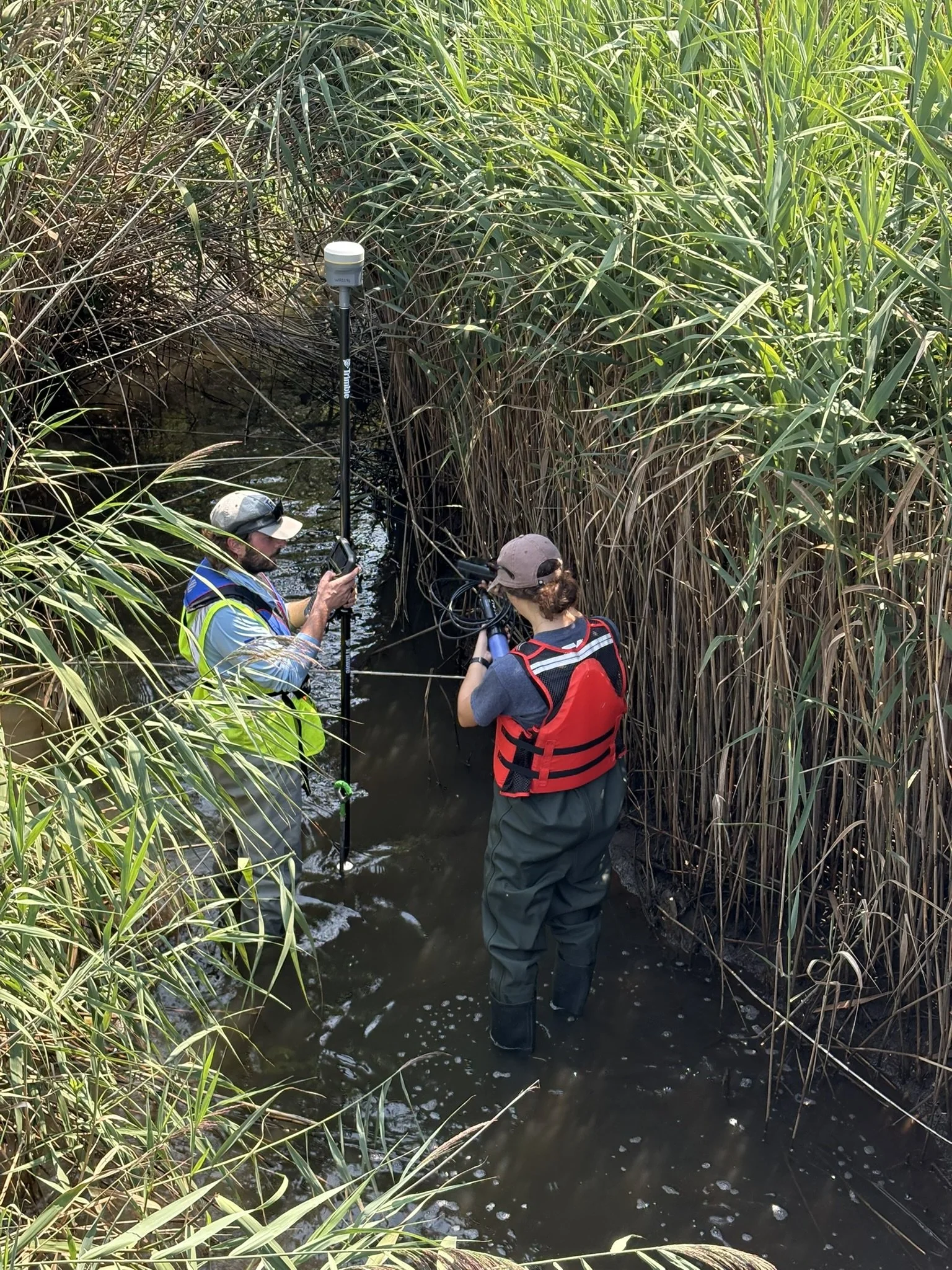
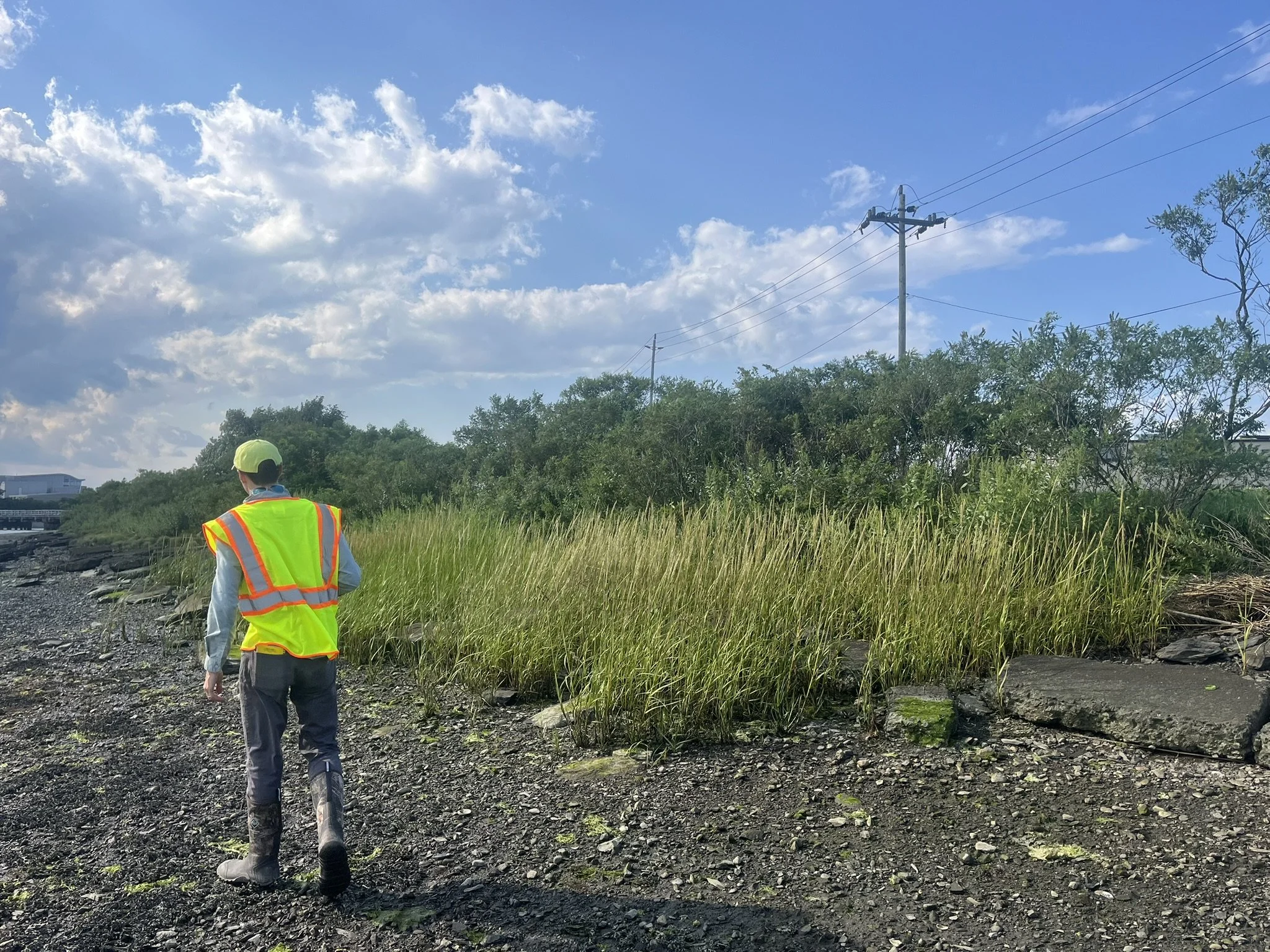
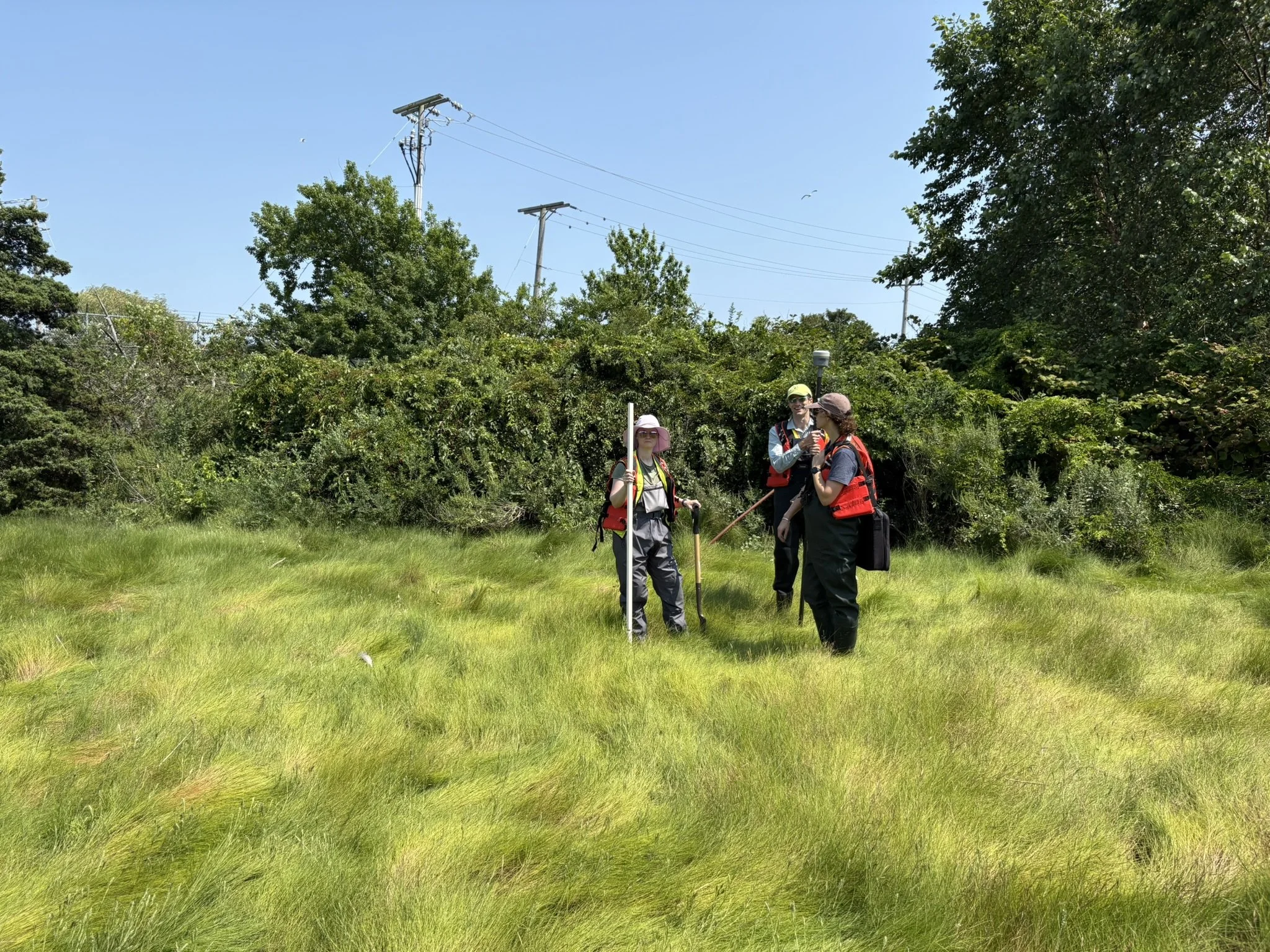
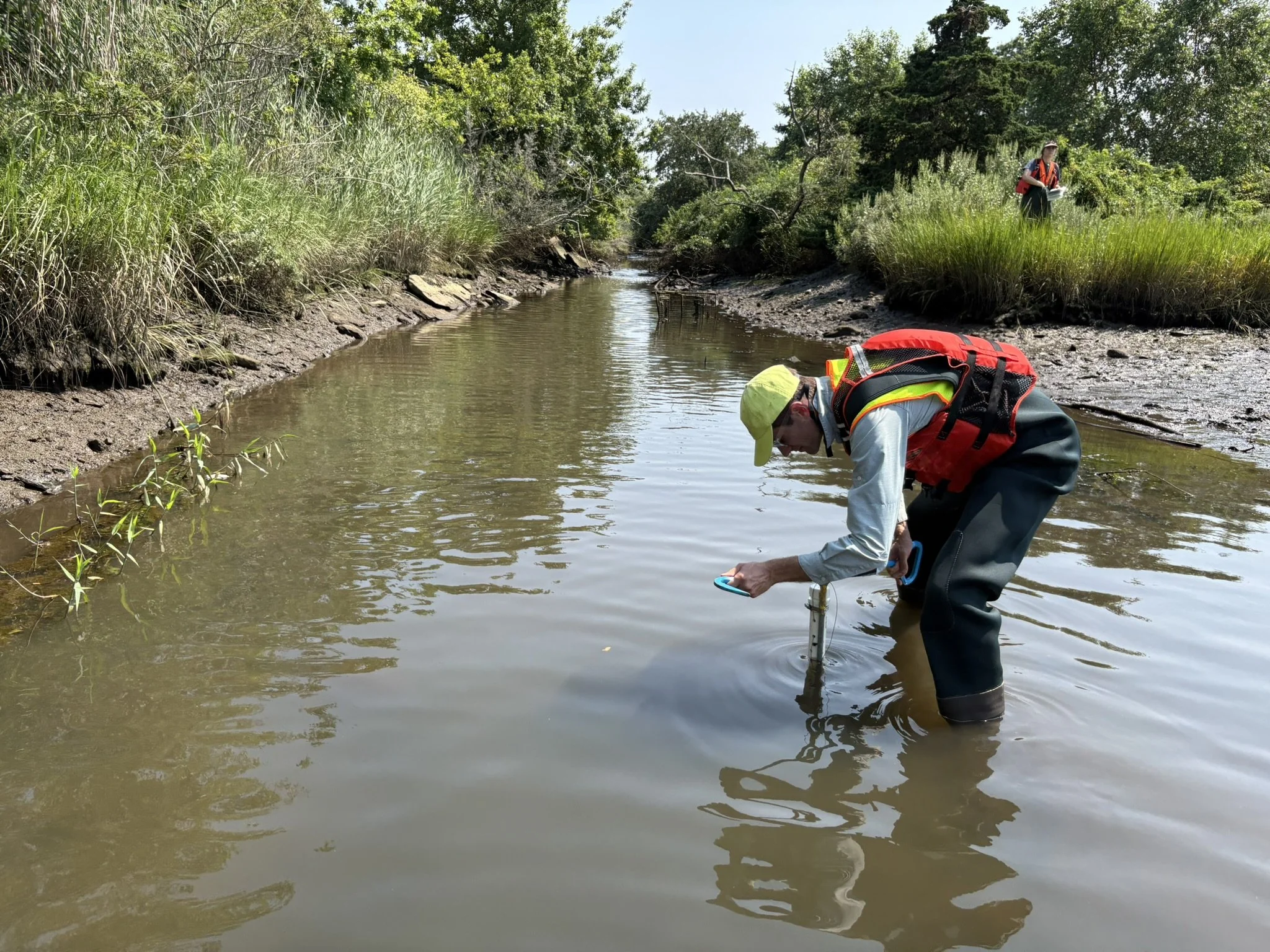
Field investigations throughout the project area are helping project partners better understand existing conditions and guide restoration planning. Assessments have documented site elevations, tidal influences, wetlands, coastal features, and other conditions within and around Elizabeth Brook.
Data collection efforts have included a real-time kinematic (RTK) elevation survey, installation of three water-level sensors to measure local tidal range, and assessments of existing wetlands and coastal features. Together, these efforts provide important baseline information to support future restoration decisions.
As part of the project’s current assessment and preliminary design phase, these investigations are helping identify potential restoration opportunities and inform the evaluation of future project alternatives.
Possible Restoration Strategies
Information collected throughout the Elizabeth Brook project area is helping the project team evaluate potential restoration strategies that respond to existing environmental conditions. Current concerns include flood risk, areas of bank erosion, invasive species, and poor water quality. Potential approaches are being explored to improve the health and resilience of the Brook and surrounding habitat while supporting the project’s broader conservation goals.
These strategies are currently being considered as part of the preliminary design process. Their potential implementation will depend on further evaluation, future project phase, and available funding.
-
Areas of eroding streambanks may benefit from stabilization techniques designed to reduce further erosion and protect the surrounding landscape. Stabilizing vulnerable banks can also help limit the amount of sediment entering the water and support improved conditions within Elizabeth Brook.
-
Restoring portions of the floodplain with native vegetation could help create a healthier and more resilient landscape. Native plants can help stabilize soils, provide habitat, and improve the area’s ability to naturally manage water. Replacing or managing invasive species would also allow native plant communities to become better established.
-
Creating shellfish habitat in the Newport Harbor could help improve water quality and provide additional flooding resilience. Because shellfish depend on suitable water quality and environmental conditions, this potential strategy would be considered alongside other restoration efforts aimed at improving the overall health of Elizabeth Brook.
Looking at the Brook as a Connected System
Rather than addressing each issue individually, potential restoration strategies consider how Elizabeth Brook’s streambanks, floodplain, vegetation, water quality, and aquatic habitat function as a connected system. Potential restoration alternatives will continue to be evaluated as planning progresses to determine which approaches are most appropriate for the project area.
The current NFWF-supported planning effort is helping establish a foundation for future restoration decisions while considering the environmental needs of the Brook and surrounding community.
Connecting with Our Community
Community engagement is an important part of the Elizabeth Brook Watershed Restoration Project. Through educational outreach and hands-on learning opportunities, project partners are connecting with local students and community members to build awareness of environmental restoration, water quality, and watershed health. These efforts help strengthen community connections while encouraging environmental stewardship.
Bringing Environmental Education into the Classroom
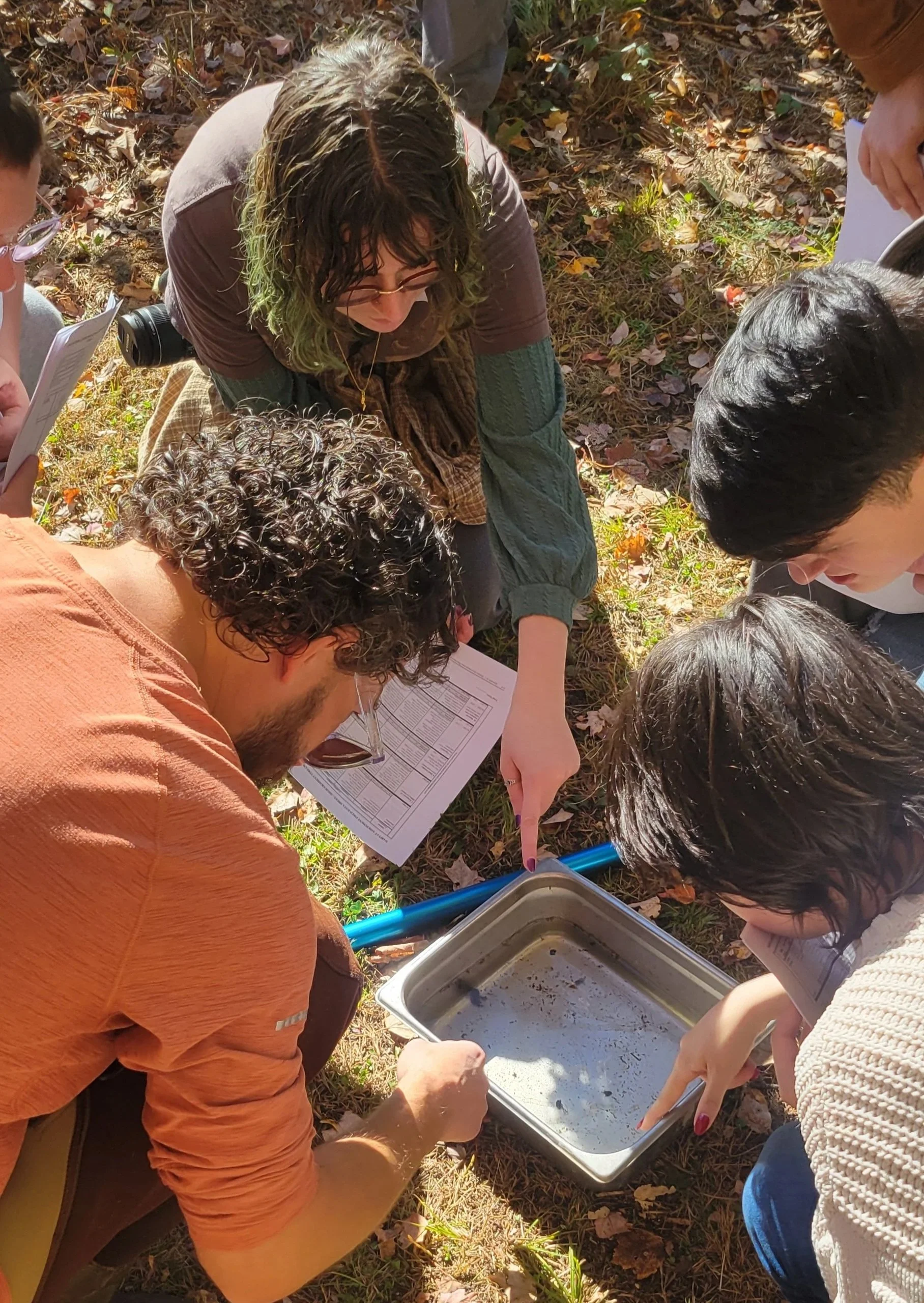
In October 2026, team members from EA partnered with CCRI to deliver an interactive environmental education session for 17 students enrolled in an introductory entomology course at CCRI’s Flanagan Campus.
This session introduced students to wildlife habitat assessments, water-level monitoring using field sensors, and water quality assessments. Students also learned about benthic macroinvertebrate sampling through demonstration at a campus pond, gaining insight into techniques used to evaluate aquatic ecosystem health.
This outreach initiative, coordinated in collaboration with the ERICD, connected classroom learning with environmental assessment activities relevant to the Elizabeth Brook restoration effort.
Inspiring the Next Generation of Environmental Stewards
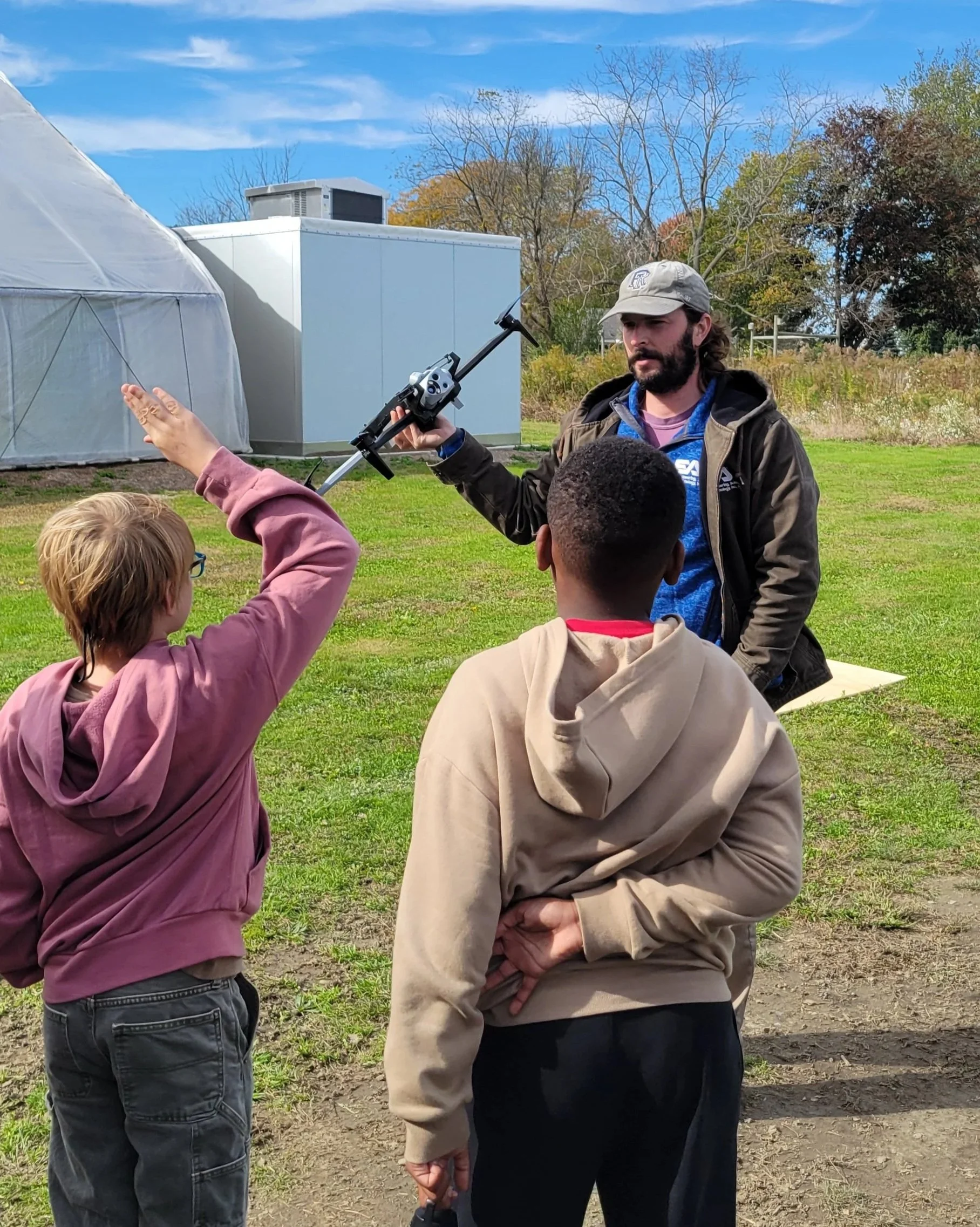
The project team also partnered with FABNewport’s youth education program to host a drone demonstration at the Portsmouth AgInnovation Farm in October 2026. Nine students, aged 10-14, participated in the educational experience, which introduced them to drones and their role in observing environmental conditions and supporting restoration efforts.
The demonstration provided an opportunity to connect environmental science with hands-on learning while showcasing how drones can be used to assess landscapes, monitor environmental conditions, and support watershed restoration and conservation planning.
The AgInnovation Farm, a nonprofit initiative of ERICD, focuses on engaging young people in agriculture and strengthening local food systems. The event supported broader outreach efforts associated with the Elizabeth Brook restoration project.
Elizabeth Brook is part of a larger, connected watershed. Learn more about the City of Newport’s ongoing efforts to address flooding and strengthen resilience throughout the watershed.